
Peer-Reviewed Publications
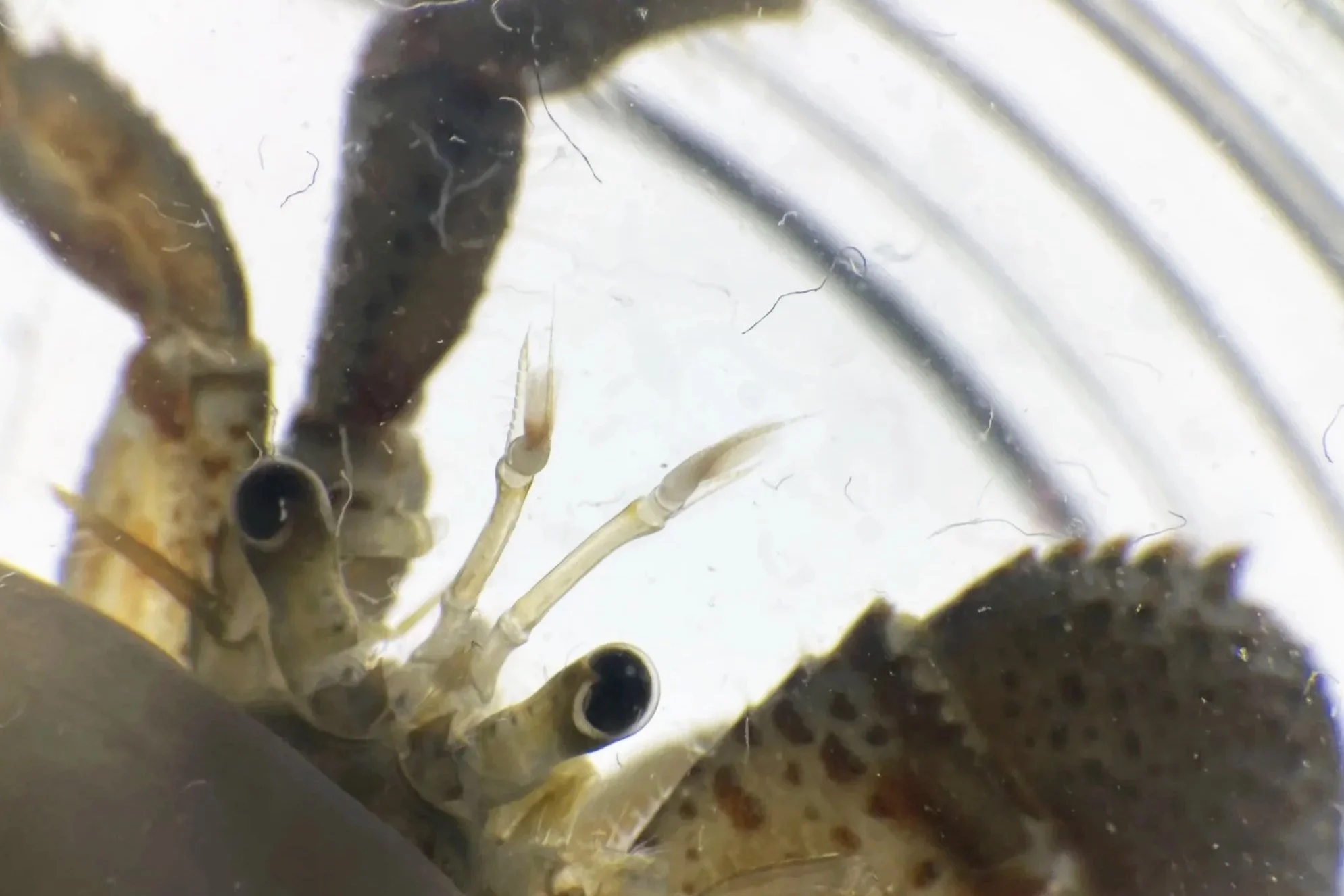
Flicking fibres: Microfibres act as sensory disruptors in a marine crustacean
Drummond, A., Turner, L.M., Wilson, A.D.M, Briffa, M.
IN PRESS. Accepted 22 February 2026.
Environmental Pollution
-
Anthropogenic inputs to the environment—including microplastics and microfibres—are global stressors known to impair multiple facets of organismal biology. However, the effects of these pollutants on sensory structures remain critically understudied. Sensory systems mediate organism-environment interactions, and pollution-derived impairment at these interfaces may cascade through bioprocessing, from information acquisition to behaviour and ultimately fitness. Microfibres, in particular, pose an additional threat, potentially physically obstructing sensory organs and chemically interfering with sensory processes. Using an invertebrate model of sensory biology, Pagurus bernhardus, we tested whether dryer lint—a complex, heterogeneous mix of treated microplastic and cellulose fibres, and other anthropogenic contaminants—acts as a sensory disruptor with ecological consequences. Using a repeated-measures design, we exposed crabs to either microfibres or control seawater and quantified two sensory behaviours (antennular flicking and grooming). We examined the extent of microfibre transfer from contaminated to clean seawater and used scanning electron microscopy (SEM) to image ablated antennules and assess structural fouling. Finally, we measured the effects of contaminant exposure on foraging latency, linking microfibre exposure to energy gain and fitness outcomes. Microfibres were transferred between conditions and led to antennular fouling. Exposed individuals increased rates of antennular flicking, but not grooming, and had significantly longer foraging times, consistent with evidence of chemosensory impairment rather than mechanical obstruction. Together, these results demonstrate that microfibres can impair information acquisition and degrade sensory performance. Our findings identify microfibre pollution as a potential source of sensory disruption that may alter energetics and fitness, revealing a previously overlooked mechanism by which global anthropogenic pollutants may reshape ecological interactions and ecosystem functioning.
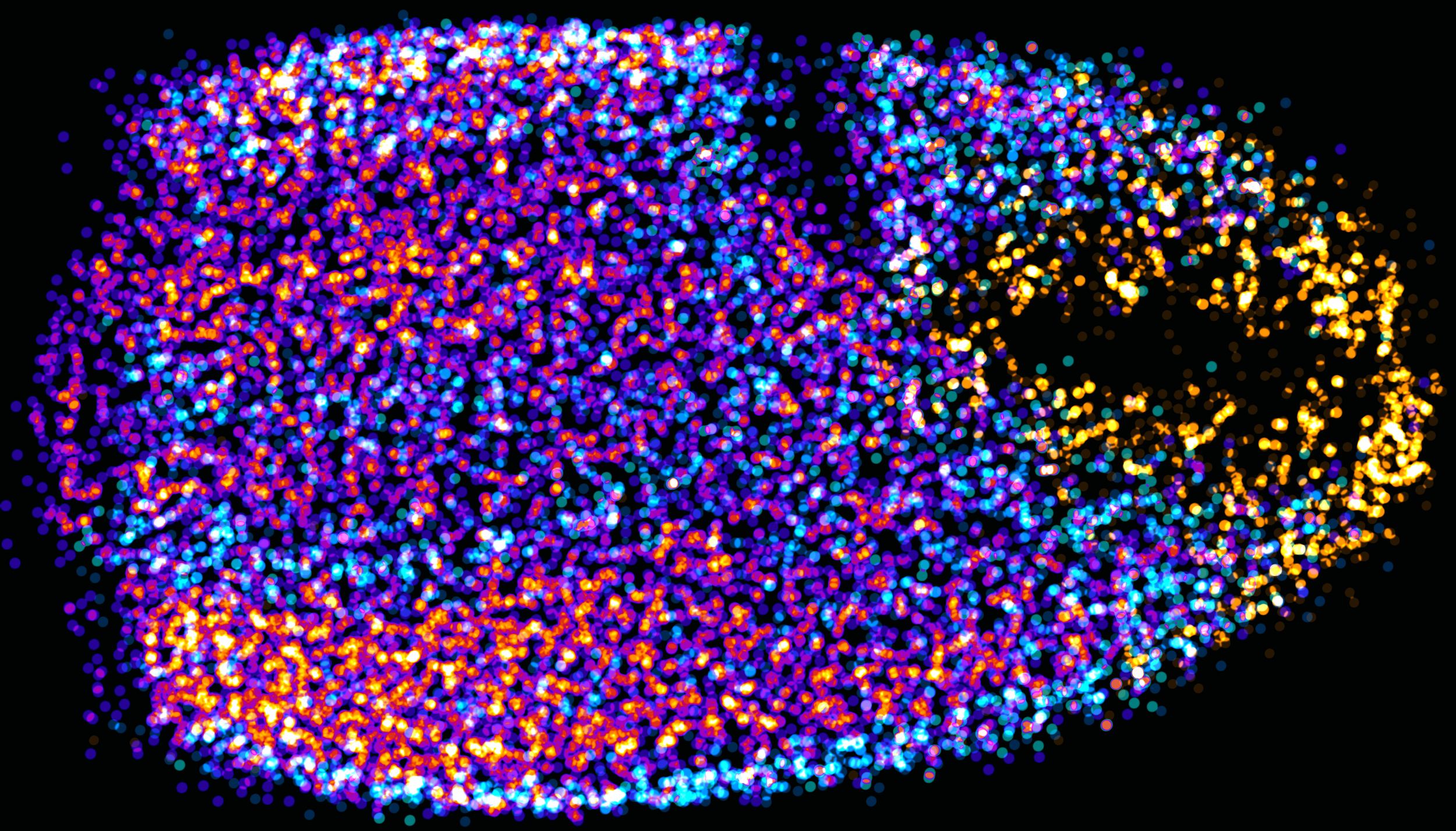
A sensory investment syndrome hypothesis: personality and predictability are linked to sensory capacity in the hermit crab Pagurus bernhardus
Drummond, A., Nash, S., Holloway, T., Turner, L.M., Wilson, A.D.M, Briffa, M.
2025
Proceedings of the Royal Society B
-
Correlated phenotypic traits (i.e. syndromes) may manifest as associations between different behavioural types or between behavioural and non-behavioural phenotypes. While syndromes research is extensive, correlations involving behavioural type and sensory morphology have yet to be investigated. Sensation is essential in decision-making and should be correlated with behavioural phenotypes involved in risk response, including boldness. We investigated correlations between boldness and sensory capacity in Pagurus bernhardus hermit crabs, taking repeat measures of startle response durations to assess hermit crab personality and predictability. The correlation between startle response and the sensillar density (i.e. number of sensilla per unit surface area) of both chelipeds was assessed using Bayesian-fitted double hierarchical general linear models. Negative correlations between these traits support the existence of a syndrome linking sensory capacity and behavioural type, hereafter distinguished as a ‘sensory investment syndrome’. Increasing sensillar density on the major claw also corresponded with reduced within-individual variation, or predictability, in startle response duration. By revealing a correlation between sensory and behavioural phenotypes, our results demonstrate the importance of considering sensory morphology and performance in behavioural ecology and show how sensory investment syndromes might support behavioural strategies that help maximize fitness.
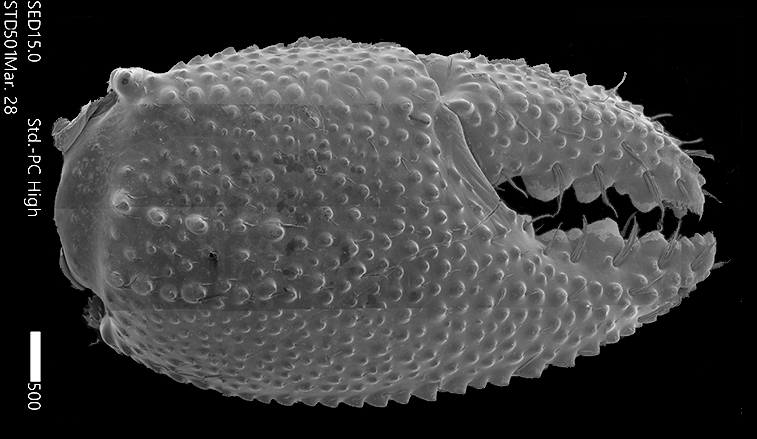
Intraspecific sensory diversity and the decapod claw: Patterns of sensillation are heterochelic and sexually dimorphic in Pagurus bernhardus.
Drummond, A., Holloway, T., Nash, S., Wilson, A.D.M, Turner, L.M., Briffa, M.
2025
Journal of Morphology
-
Information detection affects physiological performance and behaviour and is vital to survival and fitness. Despite the recognised importance of sensory adaptations in information acquisition and manipulation, many forms of sensory variation—from within individuals to between species—remain underexplored. To better understand the role of information in evolution, it is important to examine sensory variation as part of a cohesive framework of sensory diversity. Using the decapod claw, a structure well-recognised for its morphological variation, we investigated sensory diversity at the intraspecific level by assessing heterochely and sexual dimorphism in the chelar morphologies of Pagurus bernhardus hermit crabs. We employed a novel methodology using scanning electron microscopy (SEM) to assess moulted chelar tissue from both the major and minor claws. The shape, size, and sensillation (i.e., the distribution and abundance of sensilla) of both chelipeds were examined by geometric morphometric landmark analysis (GMLA), generalised Procrustes analysis (GPA), and linear mixed effects models. Hermit crabs exhibited heterochely and sexual dimorphism in both gross and sensory chelar morphologies. Sexual dimorphism was greater in the sensory morphology of the major claw, suggesting sex-based sensory specialisations, likely due to differences in mating roles and behaviours. In contrast, the minor claw's sensory morphology lacked sexual dimorphism, suggesting the sensory role of this appendage is equally important for both sexes. Our results highlight sensory variation as a fundamental aspect of functional morphology and emphasise the need to consider sexual dimorphism and body asymmetry in information acquisition. These findings contribute to a broader framework for studying sensory diversity, underscoring the importance of integrating sensory morphology, function, and ecology to fully understand the evolutionary implications of sensory specialisations.
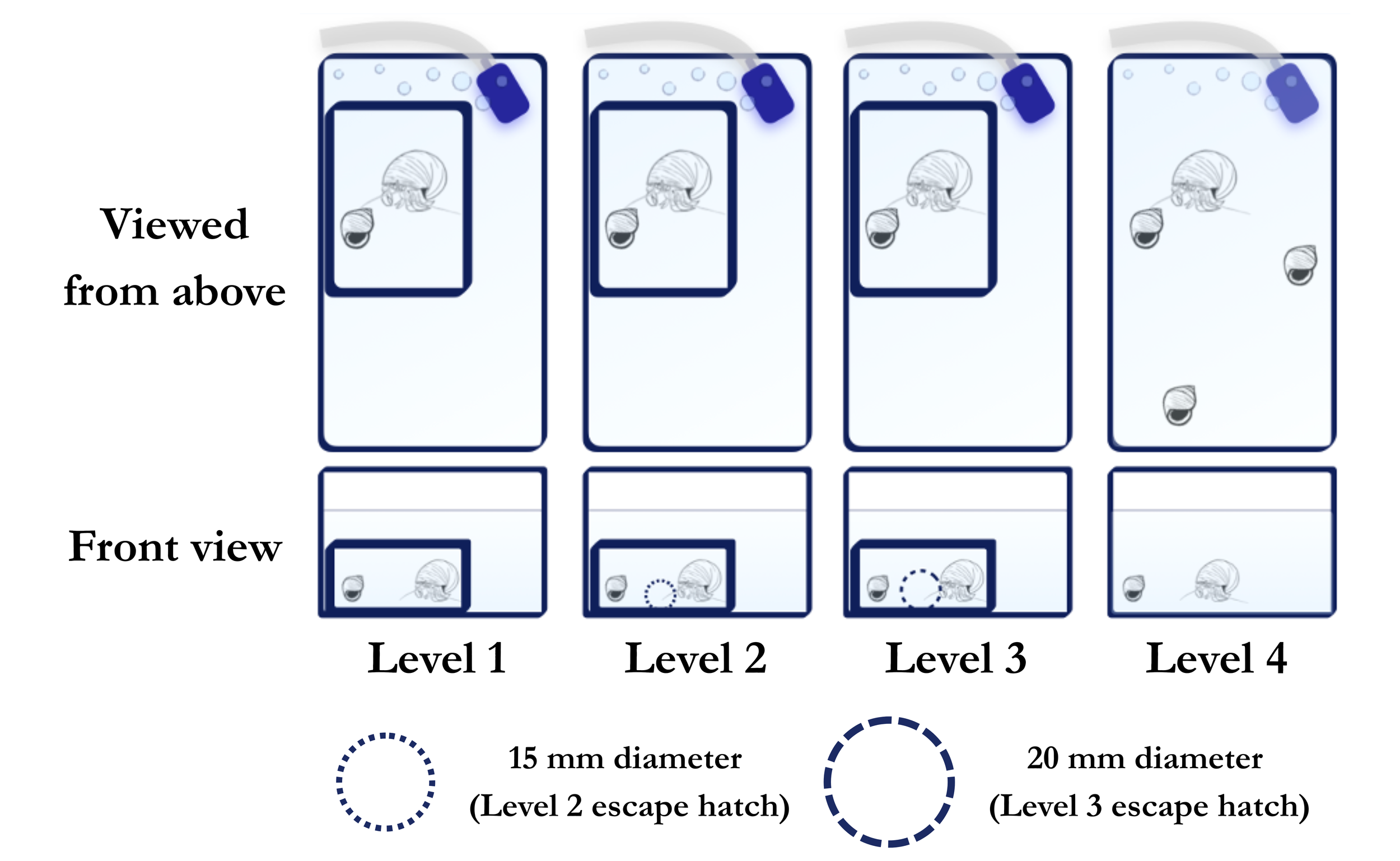
Shelled shut-ins: a conditional escape task showing perceptual awareness in hermit crabs
Drummond, A., Spicer, J.I., Briffa, M.
2026
Animal Behaviour
-
Sentience is an increasingly popular topic in animal welfare and behavioural research. However, studying sentience can be difficult and contentious. Sentience has frequently been associated with ‘feelings’ and ‘subjective states’ not directly accessible to human observers; thus, investigating awareness in animals could be an alternative approach. Frameworks of awareness have been developed for the experimental examination of cognitive capacities that might underpin ‘feelings’ as affective states and subjective experiences. Using a framework of four hierarchically arranged levels of awareness (that is, perceptual, cognitive, assessment and executive), the awareness of an intertidal crustacean, the common hermit crab, Pagurus bernhardus, was assessed. Inspired by recent work on cognitive abilities and task solving in terrestrial hermit crabs, a series of four experiments was designed to test the ability of P. bernhardus to solve a simple conditional task: if the crab changes its shell, then it can escape confinement. Crabs were exposed to different levels of confinement, including complete confinement, confinement requiring shell changes for escape, confinement requiring no shell changes for escape and no confinement. Apart from testing crabs in the absence of an external motivation (experiment 1), crab responses were tested in the presence of food (experiment 2), an additional shell (experiment 3) and under hypoxic conditions (experiment 4) to ensure that individuals were motivated to escape. Crabs were more likely to escape confinement if they did not have to change shells. Sequence analysis of the behavioural patterns of crabs revealed that they are not tactically assessing different components of their confinement to aid in task solving. Collectively, these experiments indicated that P. bernhardus displays perceptual awareness without evidence of insight or forward planning.
Shifting attention: assessing antennular ‘gaze’ in the hermit crab Pagurus bernhardus
Drummond, A., Spicer, J.I, Turner, L.M., Wilson, A.D.M, Briffa, M.
2025
Animal Behaviour
-
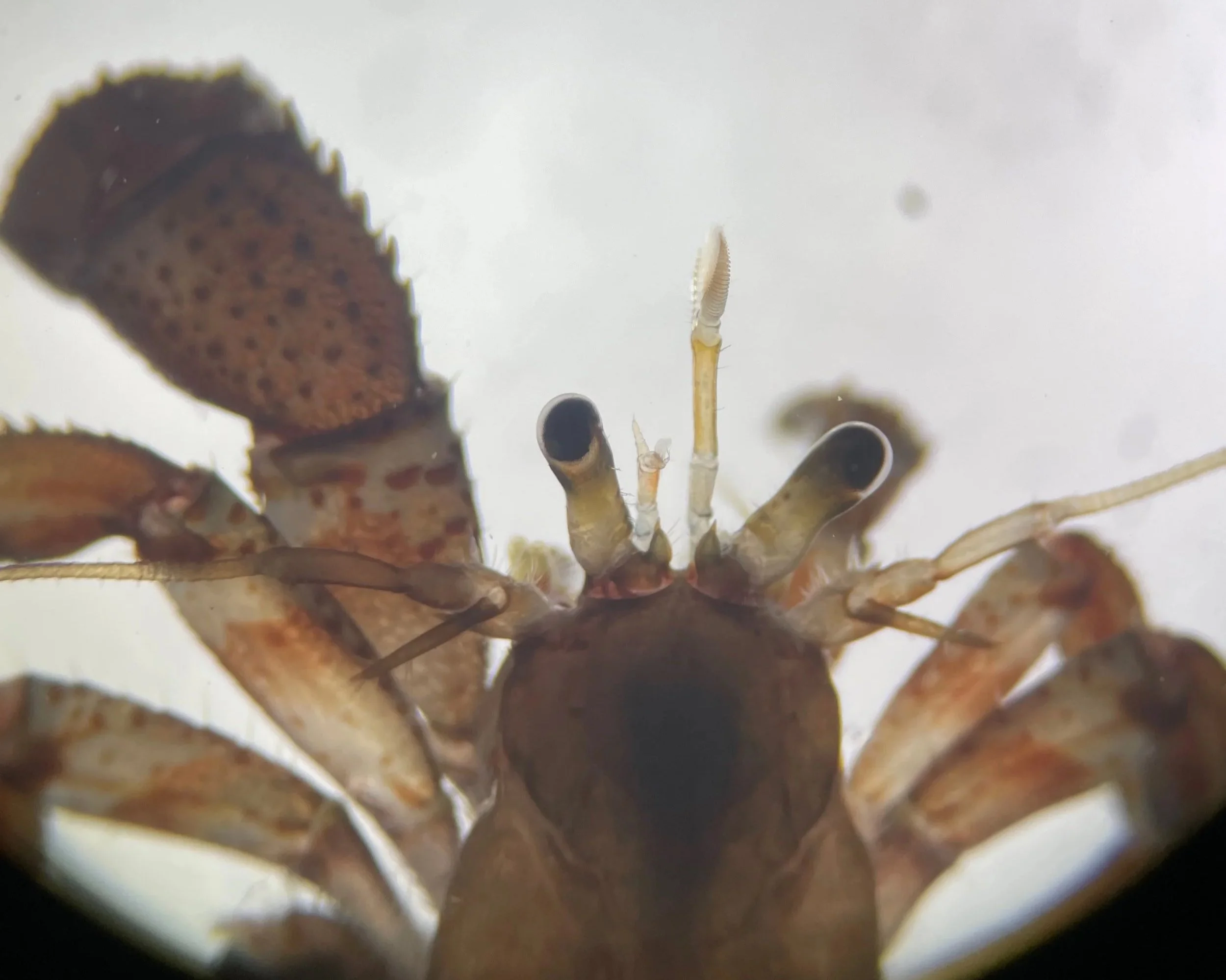
Attention (focused information gathering) is crucial for many cognitive processes. Traditionally dichotomized as reflexive or voluntary, attention is often assessed using vision, in behavioural research. However, invertebrate information acquisition often utilizes chemosensation or mechanosensation, potentially limiting the efficacy of a vision-based approach. We examined attention in Pagurus bernhardus hermit crabs, using antennules (the crustacean first antennae) as indicators of attentional shifts. Considering a change in flicking direction as analogous to a shift in gaze, we examined if hermit crabs show evidence of reflexive or voluntary attention. We exposed crabs to a chemosensory stimulus while manipulating factors influencing vulnerability (i.e. shell presence and lighting conditions). We aimed to examine how vulnerability influences attention by modifying signal salience (the value of the information contained in a stimulus) and individual vigilance (the ability to monitor environmental changes). Given that attention varies with stimulus importance and individual condition, we predicted that antennule shift likelihood, latency and duration would vary by stimulus type and both intrinsic (shell presence) and extrinsic (light regime) vulnerability. We found that attention can be assessed by monitoring the antennular ‘gaze’ or direction of antennule pointing. Crab vulnerability altered patterns of reflexive attention, modifying patterns of signal salience and individual vigilance. Vulnerability also affected attention duration, demonstrating that hermit crabs may adjust attention based on context, indicative of voluntary attention. This study highlights the utility of a novel approach to assessing attention in invertebrates, especially those reliant on chemosensory cues for behavioural decisions and cognitive processes essential to species' fitness.
More coming soon!
SOPS
Hermit Crab Maintenance and Assessment for Experimental Research
Drummond, A.
-
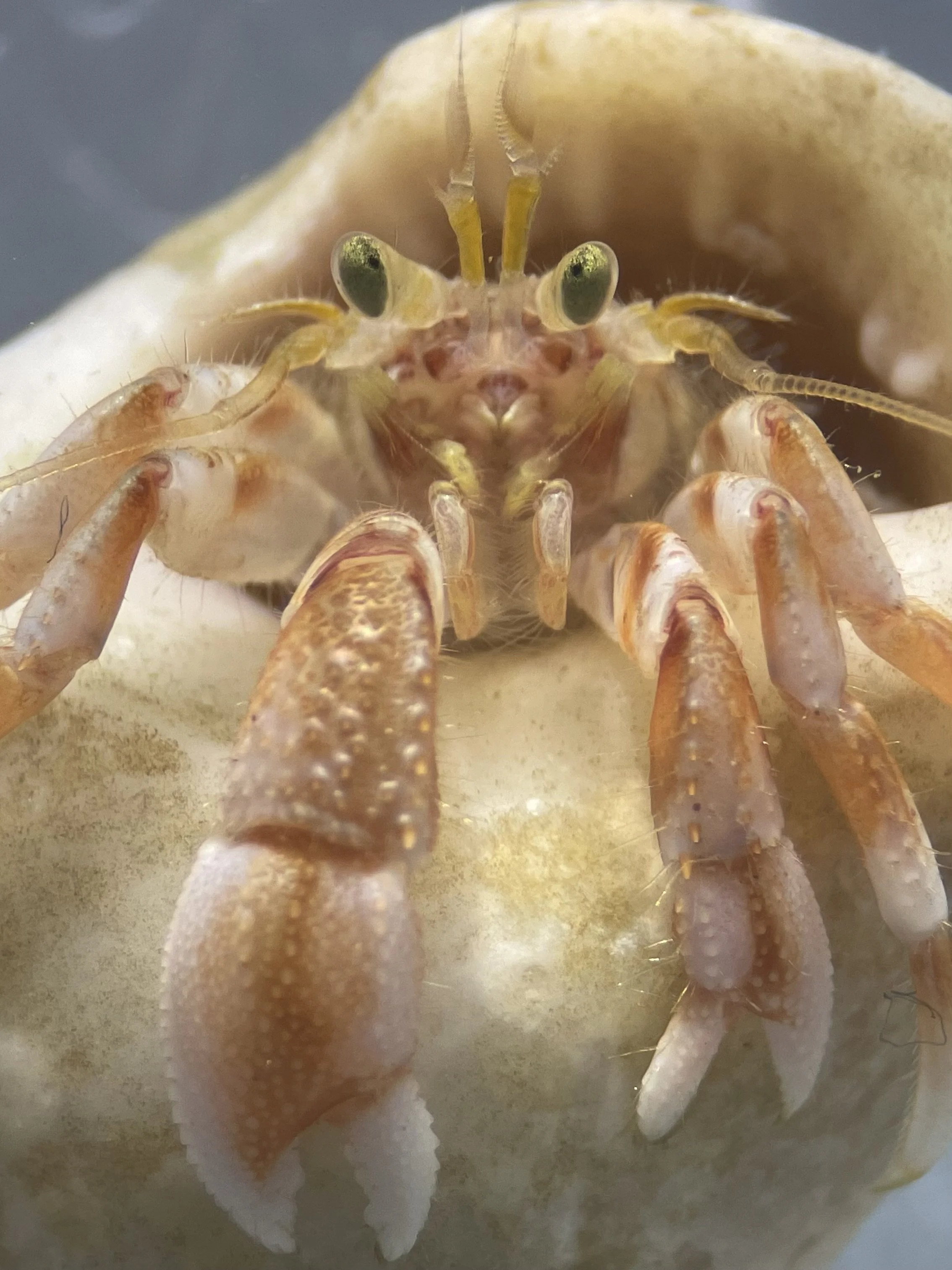
Hermit crabs are an excellent model for biological science. This guide provides an overview of best practice for undergraduate-level laboratory resesearch.